Table of Contents
The Lift Supervisor Role in Modern Crane Operations
A lift supervisor, also known as a lift director, plays a pivotal role in modern crane operations by planning, coordinating, and overseeing lifts for safety and compliance. OSHA defines the lift director as the designated qualified person responsible for the safe execution of crane lifts.
Core lift director responsibilities include:
- Planning and coordinating crane lifts from initial assessment to final placement
- Conducting pre-lift hazard assessments and developing detailed lift plans
- Ensuring proper rigging, load calculations, and adherence to load charts
- Directing the crane operator and signalperson, maintaining overall accountability for safe execution
These lift director responsibilities form the foundation of safe crane operations. OSHA mandates that a lift director be present for critical lifts–those where the load exceeds 50% of the crane’s chart capacity, for example. The agency also specifies critical lift plan requirements such as load weight verification and hazard mitigation. While the crane operator focuses on machine operation and the signalperson provides hand signals, the lift supervisor has ultimate authority for the lift’s safe execution.
Modern lift supervisors leverage technology such as load cells, lift planning software, and real-time monitoring systems to enhance accuracy. NCCCO certification for lift directors is a preferred qualification, demonstrating expertise in load charts, rigging, and safety standards. This role is essential across construction, oil & gas, power generation, and manufacturing, where complex lifts demand specialized oversight.
At Crane Industry Experts, we understand the critical role a lift supervisor plays in project success. Many projects partner with providers of certified lift director services to ensure compliance and safety.
Core Responsibilities of a Lift Supervisor
A well-coordinated lift begins with a capable lift supervisor. In crane and rigging operations, the lift supervisor is the on-site lead responsible for executing the lift plan and coordinating the crew. Although OSHA does not separately define the lift supervisor position, it recognizes the role as integral to a safe lift. The explicitly defined lift director develops the plan, while the lift supervisor translates that plan into action on the ground. Crane Industry Experts supplies lift supervisors who fulfill this crucial role on projects across the country.
The following table highlights the differences between the lift supervisor and the lift director.
| Aspect | Lift Supervisor | Lift Director |
|---|---|---|
| OSHA Definition | Not explicitly defined by OSHA; generally recognized as the person in charge of executing the lift plan and coordinating the crew. | Explicitly defined in OSHA 1926.1401 as a qualified person designated to plan and oversee lifts. |
| Primary Responsibilities | Pre-lift briefing, crew coordination, safety compliance on site | Lift plan development, load chart review, authority to stop operations |
| Certification Requirements | Often NCCCO rigger/signalperson; no standalone OSHA requirement. | Must be a qualified person per OSHA; NCCCO Lift Director certification recommended. |
| Authority to Stop Work | Limited–typically reports concerns to lift director or site supervisor. | Full authority to halt operations immediately if safety is compromised. |
| Pre-Lift Briefing Responsibility | Leads the crew briefing and ensures each team member understands their role. | May delegate briefing to the lift supervisor but retains ultimate responsibility. |
While the lift director handles the overarching lift director responsibilities–crafting the plan, reviewing load charts, and retaining stop-work authority–the lift supervisor executes the plan on site. Both positions must follow critical lift plan requirements, with the supervisor ensuring that every crew member adheres to the director’s plan. This two-tier oversight keeps high-risk lifts safe and compliant.
Our lift supervisors at Crane Industry Experts perform a range of safety-critical duties that support the lift director’s plan:
- The lift supervisor leads the pre-lift briefing, confirming each crew member’s role and the emergency procedures.
- The lift supervisor coordinates all rigging and signaling activities, often supervising certified rigging services carried out by NCCCO-qualified riggers.
- The crew lead monitors worksite conditions–wind, ground stability, obstacles–and immediately reports issues to the lift director.
- The supervisor ensures that every operation complies with OSHA 1926 Subpart CC and the lift plan’s specific mandates.
- The lift supervisor serves as the communication hub between the lift director and the crew, relaying instructions and safety updates.
By carrying out these duties, the lift supervisor strengthens the entire lift team and reinforces the lift director’s plan. Crane Industry Experts deploys lift supervisors and NCCCO-certified personnel who bring this dedication to every job.
Lift Director Responsibilities and Critical Lift Compliance
While the crane operator controls the machine, the lift director, often called the lift supervisor, holds overall responsibility for the lift’s safety and compliance, designated by the employer as the single on-site authority.
ASME B30.5 Duties of a Lift Director
Under ASME B30.5, lift director responsibilities begin with the employer designating a qualified individual who has the express authority to stop work immediately if unsafe conditions arise. Pre-lift planning duties include verifying crane capacity, load weight, rigging configuration, and ground conditions. The lift director also confirms that all riggers and signalpersons are briefed and positioned correctly, and that the ground can support outrigger loads without settlement.
During the lift, the director supervises the entire operation from rigging attachment to final load placement. He or she monitors the crane’s load moment indicator, ensures the load is balanced, and coordinates with the operator and signalpersons through clear radio or hand signals. The lift director is empowered to halt work at any sign of trouble and must document any deviations from the plan.
Critical Lift Plan Requirements and Triggers
A critical lift is any operation that poses elevated risk due to load weight, complexity, or proximity to people and structures. OSHA 1926.1431 requires a written critical lift plan and professional engineer approval whenever personnel are hoisted in a crane-suspended basket. Industry practice commonly triggers a critical designation at loads exceeding 75% of the crane’s rated capacity; many organizations adopt a 50% to 75% range for added safety.
| Condition | OSHA Threshold | ASME B30.5 Guidance |
|---|---|---|
| Load exceeds a percentage of crane rated capacity | Industry practice >75% | >75% (often 50%-75%) |
| Personnel hoisted in basket | Requires plan and PE approval | Always considered critical |
| Multiple cranes (tandem lift) | Qualified lift director required | Written plan and engineering sign-off |
| Lift over occupied infrastructure | Analysis required | Often requires PE review |
Documentation and Computation for Lift Plans
A comprehensive lift plan includes ground pressure calculations that account for outrigger loading and soil bearing capacity. These analyses prevent crane instability caused by soft or uneven ground. For tandem lifts, the plan must detail load sharing percentages between cranes and the communication protocol between operators. For complex lifts, our construction lifting consultation services provide the expert engineering review that fulfills ASME B30.5 and OSHA requirements.
How to Implement Lift Supervision on Your Job Site
Implementing this role involved structured planning, communication, and compliance. Effective oversight is especially critical for complex projects like hospital construction lift planning, where our certified team provides the necessary lift supervision.
Pre-Lift Briefing Best Practices
The pre-lift briefing is a mandatory planning meeting that brings together all personnel involved in the lift to align on procedures. According to OSHA 1926.1425, the lift supervisor must ensure the operator and crew receive specific instructions before any lift begins.
Training and Certification Pathways for Lift Supervisors
Obtaining the proper certifications is essential for any designated lift supervisor. At Crane Industry Experts, we provide fully certified personnel who hold the following credentials:
- NCCCO Certified Crane Operator (Mobile or Tower)
- NCCCO Rigger Level I / II
- NCCCO Certified Signalperson
Advanced Coordination for Complex and Critical Lifts
Advanced coordination for complex and critical lifts begins with a dedicated lift supervisor. The lift director’s responsibilities include reviewing and approving the full critical lift plan before hoisting activity commences. Our team of NCCCO-certified riggers and signalpersons supports the lift supervisor by confirming load weights and crane configurations.
| Briefing Item | Description |
|---|---|
| Roles and Responsibilities | Confirm each crew member understands their specific assignment, including operator, rigger, signalperson, and lift supervisor. |
| Hand Signals and Communication | Review standard hand signals, radio protocol, and emergency stop signals. |
| Lift Sequence and Load Path | Walk through the lift sequence, identify obstacles, and verify the planned load path. |
| Emergency Procedures | Review emergency stop actions, evacuation routes, and communication with site safety personnel. |
| Rigging Inspection and Attachments | Confirm all rigging hardware is inspected, rated, and properly attached to load. |
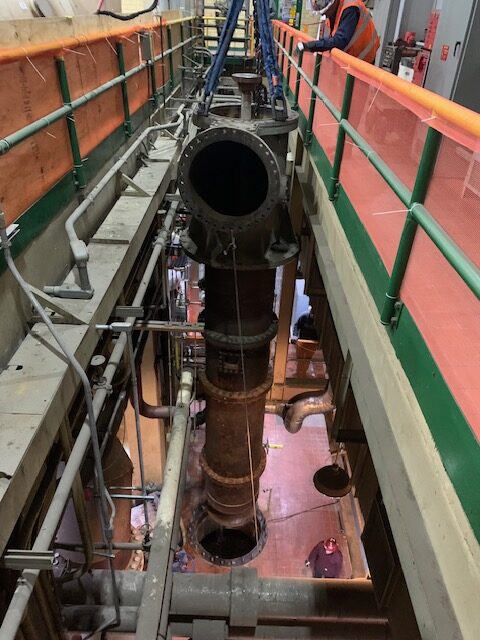
For high-stakes environments such as power plants, our comprehensive power plant lift planning ensures every element is addressed. This methodical approach guarantees a safe and compliant lift.
Frequently Asked Questions About Lift Supervisors
What is a lift supervisor?
A lift supervisor is the on-site professional responsible for overseeing all lifting operations, ensuring safety and compliance. Our lift supervisors are NCCCO-certified, meeting rigorous industry standards.
What is the difference between a lift supervisor and a lift director?
The lift director responsibilities include overall lift planning and critical-lift authority, while the lift supervisor focuses on daily execution and crew coordination.
When is a lift supervisor required?
Many jurisdictions require a qualified lift supervisor for complex lifts. For complex utility infrastructure lifting projects, our lift supervisors coordinate every step.
Elevate Your Project with a Competent Lift Supervisor
At Crane Industry Experts, we understand that a skilled lift supervisor is the linchpin between a well-planned lift and flawless field execution. You gain an experienced professional who monitors every load path, validates adherence to the critical lift plan, and enforces stop-work authority when conditions shift. We Are Ready to Elevate Your Project!